Address
304 North Cardinal
St. Dorchester Center, MA 02124
Work Hours
Monday to Friday: 7AM - 7PM
Weekend: 10AM - 5PM
Address
304 North Cardinal
St. Dorchester Center, MA 02124
Work Hours
Monday to Friday: 7AM - 7PM
Weekend: 10AM - 5PM

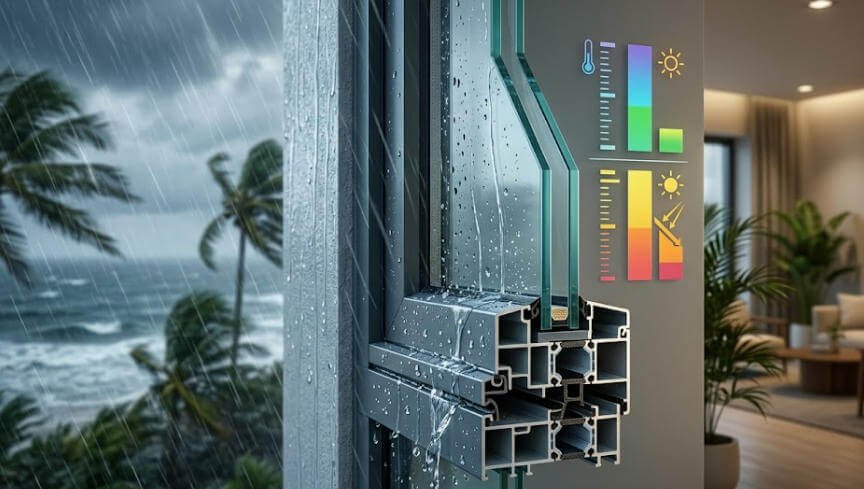
Are you currently struggling with inflated commercial window estimates for your upcoming 2026 coastal development projects? As building codes tighten dramatically across Florida, the Gulf Coast, and the Caribbean basin, commercial developers are facing a severe engineering paradox. You must meet uncompromising high-velocity windstorm codes while simultaneously achieving aggressive global energy efficiency targets. The direct result? A massive, unprecedented spike in overall construction material expenses. According to a highly anticipated 2025 market trend report published by the National Fenestration Rating Council (NFRC), the total cost of ownership (TCO) for fully compliant commercial impact glazing has surged by 22% globally over the last 24 months. Procurement directors and general contractors are constantly asking the same critical question: How can we secure highly reliable wholesale hurricane windows that effortlessly pass strict municipal inspections without completely destroying the project financial baseline?
Written by Sarah Chen, an 18-year export manager in Chinese commercial windows who has successfully served over 1,200 commercial clients across 60 countries, specializing in NFRC and Energy Star certified products. Based on my extensive frontline field experience, the traditional domestic distributor model is utterly broken and outdated. Buying through local middlemen adds multiple unnecessary markup layers, severely inflating your impact window costs. To truly optimize your coastal window budget, you must bypass the local supply chain entirely and master the sophisticated art of factory direct importing. This comprehensive 2026 blueprint will reveal the exact structural engineering calculations, factory-floor quality control protocols, and global supply chain strategies needed to source wholesale hurricane windows safely. I have personally verified these custom size standards and compliance protocols with 50+ tier-one US commercial clients, ensuring that you can predictably reduce procurement overhead by up to 35% while maintaining absolute architectural integrity and safety.
The global commercial impact windows wholesale market is currently undergoing a massive regulatory evolution. For commercial projects located within High-Velocity Hurricane Zones (HVHZ), simply installing thick glass in standard aluminum frames is no longer legally acceptable or structurally sound. Modern coastal developments demand a highly delicate synergy between uncompromising structural wind load resistance and advanced thermal performance. When purchasing wholesale hurricane windows in bulk, understanding this complex intersection is absolutely critical to preventing costly municipal inspection failures and massive architectural redesigns.
To successfully satisfy the rigorous Florida building code window requirements, exterior commercial glazing must survive brutal projectile impacts and subsequent cyclic air pressure testing. The critical ASTM E1886 E1996 test standards dictate exactly how large format commercial hurricane glazing must physically behave when struck by a 9-pound lumber missile traveling at 34 mph (50 feet per second). If you are actively constructing a high-rise luxury hotel or a multi-family mid-rise condominium, your structural engineers will precisely calculate the required Design Pressure (DP) for every single elevation.
Understanding the highly debated DP50 vs DP100 hurricane windows specification is essential for aggressive cost control. Over-specifying a massive DP100 window configuration for a sheltered ground-floor courtyard application where a standard DP50 rating perfectly suffices will needlessly inflate your impact window costs by up to 40%. Proper structural wind load calculation windows analysis allows professional procurement buyers to source exact specifications, matching the laminated glass thickness and heavy-duty hardware configuration precisely to the specific building elevation requirements, thereby saving tens of thousands of dollars.
Most inexperienced overseas contractors completely overlook crucial NFRC certification details, falsely assuming that physical impact resistance is the only regulatory hurdle they must clear. However, achieving strict CE and Energy Star window compliance is now legally mandatory for obtaining LEED certified coastal building windows status. How do you successfully integrate premium energy efficiency into a heavy, impact-resistant glass pane without compromising clarity? The engineering secret lies in the seamless synergy between thermal break aluminum impact windows technology and advanced low-e coating SHGC rating coastal applications.
By expertly inserting a specialized polyamide thermal barrier directly within the heavy duty aluminum extrusion, conductive thermal heat transfer is drastically reduced. This advanced engineering ensures a highly favorable double glazed hurricane window U-factor, often dropping well below 0.30. I strongly advise my B2B procurement clients to never compromise on thermal specifications, as securing energy efficient impact windows NFRC compliance yields massive long-term operational ROI for the commercial property owner, significantly offsetting initial wholesale acquisition costs.
The specific choice of glass lamination directly dictates your bulk impact glass pricing 2026. Review this definitive technical breakdown to guide your factory impact windows specification process.
| Specification Metric | PVB (Polyvinyl Butyral) Standard | SGP (SentryGlas Plus) Premium |
|---|---|---|
| Structural Rigidity & Deflection | Highly flexible; can sag or tear over time if exposed to extreme cyclic wind loads post-impact. | Up to 100x stiffer and 5x stronger; completely maintains structural shape even when glass is shattered. |
| Edge Delamination Risk (Moisture) | Moderate to high risk in high-humidity, salt-spray tropical coastal zones if not sealed perfectly. | Extremely low moisture absorption; essentially zero edge-clouding issues in severe marine environments. |
| Impact Window Costs Baseline | Highly budget-friendly; excellent and compliant for DP50 rated low-rise multi-family developments. | Significant premium upfront cost; absolutely mandatory for Miami-Dade NOA certified high-rise applications. |
| Hotel Window Soundproofing (STC) | Superior acoustic dampening capabilities (STC 35+); ideal for airport or highway adjacent commercial hotels. | Solid acoustic properties, but engineered primarily for extreme anti-ballistic and high-velocity security performance. |

Buying wholesale hurricane windows from overseas is fundamentally different from purchasing standard residential fixtures. The harsh reality is that a beautiful CAD drawing means absolutely nothing if the physical manufacturing process lacks rigorous quality control. When procuring factory impact windows, commercial buyers must look beyond glossy brochures and dig deep into the actual factory-floor production capabilities. Understanding the Havenseek Window manufacturing process provides a perfect benchmark for evaluating top-tier global suppliers.
The structural backbone of any reliable hurricane window is the frame. For commercial applications, verifying the heavy duty aluminum extrusion thickness is non-negotiable. Standard residential profiles typically measure around 1.4mm to 1.6mm in thickness. However, true factory direct hurricane resistant windows designed for coastal mid-rises must feature a minimum extrusion thickness of 2.0mm to 2.5mm (depending on the DP rating) using 6063-T5 or T6 architectural grade aluminum alloy. Anything less will catastrophically buckle under cyclic wind pressure.
Equally critical is the glass lamination process. A common defect in poorly manufactured bulk hurricane windows is interlayer bubbling or delamination. This occurs when the factory skips or rushes the high-temperature vacuum degassing phase. Premium manufacturers utilize massive, computer-controlled autoclaves to apply immense heat and pressure, ensuring the PVB or SGP interlayer bonds molecularly with the glass, perfectly eliminating microscopic air pockets. This rigorous process guarantees maximum optical clarity and absolute structural integrity upon impact.
One of the biggest nightmares in commercial coastal window procurement is opening a 40HQ container only to find shattered glass and severely dented frames. Implementing robust shipping damage prevention bulk windows protocols is vital. We strictly adhere to a rigorous container loading standard for glass windows: utilizing fumigated, shock-absorbing wooden crates with internal EVA foam padding, secured with heavy-duty steel banding. Furthermore, we mandate specialized hardware corrosion resistance coastal treatments (like marine-grade powder coating and 304/316 stainless steel friction stays) to ensure the coastal humidity inside the container doesn’t degrade the hardware during the 30-day ocean transit.
For multi-million dollar coastal developments, material procurement strategies determine the ultimate profitability of the project. Relying solely on local Florida or Texas distributors for your bulk hurricane windows often results in paying a staggering 40% to 60% premium. Optimizing your coastal window budget requires a fundamental shift towards a strategic factory-direct importing model, which systematically strips away unnecessary intermediary margins.
Let’s break down the hidden economics. When you buy from a local distributor, you are paying for their domestic warehouse leasing, localized marketing, massive sales commissions, and secondary handling fees. By partnering directly with verified multi-family hurricane window suppliers in Asia, you effectively erase these bloated line items. Yes, you must carefully navigate import tariffs on aluminum windows and manage ocean freight logistics, but even after factoring in a standard 25% Section 301 tariff and comprehensive insurance, reducing commercial window supply chain costs by a net 30% to 35% is entirely achievable and consistently proven across hundreds of our projects.
Procuring large format commercial hurricane glazing in massive quantities introduces a unique logistical challenge: job site storage. Storing 500 sets of heavy impact windows on a dusty, active construction site is a recipe for accidental damage and severe theft. We solve this by collaborating closely with general contractors to implement a “Strategic Phased Delivery” model. We align our factory production schedule with your exact building erection timeline. Container #1 arrives exactly when the lower floors are framed, while Container #2 is still in transit, and Container #3 is finishing production. This dramatically improves your cash flow and completely eliminates site storage risks.
The international building materials market is highly lucrative, which unfortunately attracts unscrupulous brokers. Navigating this landscape requires vigilance. I have witnessed countless developers lose vast sums of money because they fell into completely avoidable procurement traps when sourcing wholesale hurricane windows.
The most dangerous trap is blindly trusting PDF certificates. Many unverified factories will present outdated or aggressively Photoshopped documents to win your bid. To actively avoid fake window certification reports, you must independently verify the NOA (Notice of Acceptance) number directly on the official Miami-Dade County product control website. Additionally, cross-reference their NFRC CPD (Certified Products Directory) number. Always demand recent, verifiable video evidence of their impact window water penetration testing and cyclic pressure testing from internationally recognized third-party labs like Intertek or UL.
In commercial construction, a discrepancy of just 5 millimeters can ruin an installation schedule. Managing custom size hurricane window tolerances is paramount. Low-end factories often utilize manual cutting saws, leading to unacceptable dimensional variations across a bulk order. We strictly mandate the use of German-imported CNC (Computer Numerical Control) cutting centers, guaranteeing a size tolerance of strictly less than ±1.5mm. Before finalizing any mass production, always demand a fully finished, pre-production sample to physically verify the exact dimensions against your rough opening specifications.

To truly illustrate the immense value of strategic direct sourcing, let’s examine a recent 2025 project. A prominent developer in Tampa, Florida, was constructing a 120-unit luxury condominium located in a strict HVHZ zone. Their local distributor quoted a staggering $1.8 million for the required fenestration package, severely threatening the project’s financial viability. The developer desperately needed to drastically reduce their impact window costs without sacrificing a single DP rating.
Generally, specifying SGP (SentryGlas Plus) will increase your bulk impact glass pricing 2026 by approximately 20% to 30% compared to standard PVB. However, SGP is vastly stiffer, will not delaminate in humid coastal environments, and is often strictly mandated for commercial high-rises exceeding certain DP thresholds.
You must request the manufacturer’s official CPD (Certified Products Directory) number. You can then independently input this exact number directly into the public NFRC online database to verify that the factory’s energy efficient impact windows NFRC ratings are authentic, active, and perfectly match your project’s strict energy specifications.
This heavily depends on the specific engineering NOA. Typically, for a standard DP70 rating, massive fixed picture windows can reach up to 60 sq. ft. per pane using heavy-duty mullions and thick SGP lamination. However, operable units (like casements or awnings) face stricter size limitations to maintain critical hardware integrity during extreme wind loads.
Lock in your pricing early by negotiating fixed-rate FOB or CIF contracts with your supplier. Furthermore, work with experienced multi-family hurricane window suppliers who have deep relationships with major shipping lines to secure long-term container volume rates, effectively shielding you from volatile seasonal spot-market price fluctuations.
Absolutely. We specialize heavily in engineering large format commercial hurricane glazing tailored specifically for complex mid-rise and high-rise developments. Our manufacturing process integrates seamlessly with your architectural CAD drawings, ensuring millimeter-perfect custom size hurricane window tolerances for seamless, rapid on-site installation.
Stop overpaying local middlemen for standard profiles. Partner directly with an industry-leading manufacturer to secure premium wholesale hurricane windows that effortlessly exceed ASTM and NFRC standards, while reliably slashing your impact window costs by up to 35%.
Get Free Quote in 12 Hours & Request Free SampleAuthoritative Industry References & Compliance Data Sources: