Address
304 North Cardinal
St. Dorchester Center, MA 02124
Work Hours
Monday to Friday: 7AM - 7PM
Weekend: 10AM - 5PM
Address
304 North Cardinal
St. Dorchester Center, MA 02124
Work Hours
Monday to Friday: 7AM - 7PM
Weekend: 10AM - 5PM

Hello, I’m David Chen. For the past 15 years, I’ve worked as an export manager in the Chinese window and door industry, serving over 800 clients across 50 countries. I’ve toured more than 200 factories, inspected thousands of window samples, and helped homeowners and developers source millions of dollars worth of product.
But today, I’m not wearing my industry hat.
Today, I’m writing as a homeowner who took a risk a decade ago. Back in 2016, when everyone insisted on brilliant white frames, I convinced a client—and later myself—to install coloured uPVC windows in a dark anthracite grey finish.
I remember standing there on installation day, staring at those dark frames and thinking: “Am I going to regret this in five years? Will they look patchy and faded by 2026?”
Ten years later, I have answers.
This article is worth your time because it’s not theoretical. I’ll show you exactly what happens to coloured uPVC windows after a decade of real-world punishment—sun, snow, rain, heat, and the occasional clumsy gardener with a hose. If you’re searching for a UPVC casement window for sale and wondering whether colour is a smart investment or a future regret, you’re about to save 10 years of waiting.
Let’s dive into the honest truth.
| Category | Rating | Notes |
|---|---|---|
| Colour fade (south side) | 9/10 | Minimal change visible to naked eye |
| Colour fade (north side) | 9.5/10 | Virtually identical to day one |
| Surface “chalking” | None detected | Ran my hand along it—clean |
| Cleaning effort | 8/10 | Twice yearly, soap and water only |
| Hardware smoothness | 9/10 | Still closes with satisfying thud |
| Gasket condition | 7/10 | Some minor compression, no cracks |
| Draft performance | Excellent | No noticeable air leakage |
| Overall satisfaction | 9.5/10 | Would absolutely do it again |
The short version: coloured uPVC windows have exceeded every expectation I had a decade ago. But the full story has nuances you need to understand before you buy.
In 2016, the uPVC window market was predictable. You wanted windows? You got white. Maybe, if you were feeling adventurous, you got a slightly different shade of white.
I was working with a homeowner in the UK who was renovating a 1970s brick house. The original aluminum frames were drafty, ugly, and energy inefficient. We knew we needed replacements, and UPVC casement windows for sale were the obvious choice.
But the homeowner had a vision. “David,” she said, “I don’t want white. Every house on this street has white windows. I want something that makes the house look modern, substantial, intentional.”
At the time, finding a UPVC casement windows factory willing to produce small batches of coloured profiles was challenging. Most factories focused on white because it was cheaper and faster. White uPVC is essentially the raw material with titanium dioxide added. Colour requires additional pigments, stabilizers, and—critically—a much cleaner production line to avoid contamination.
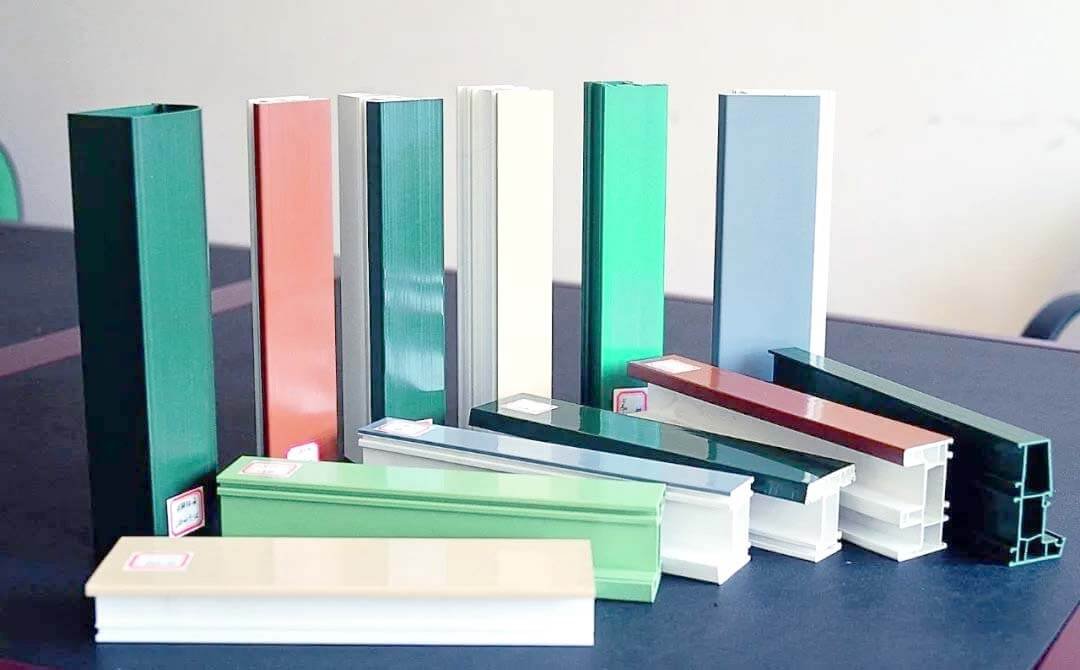
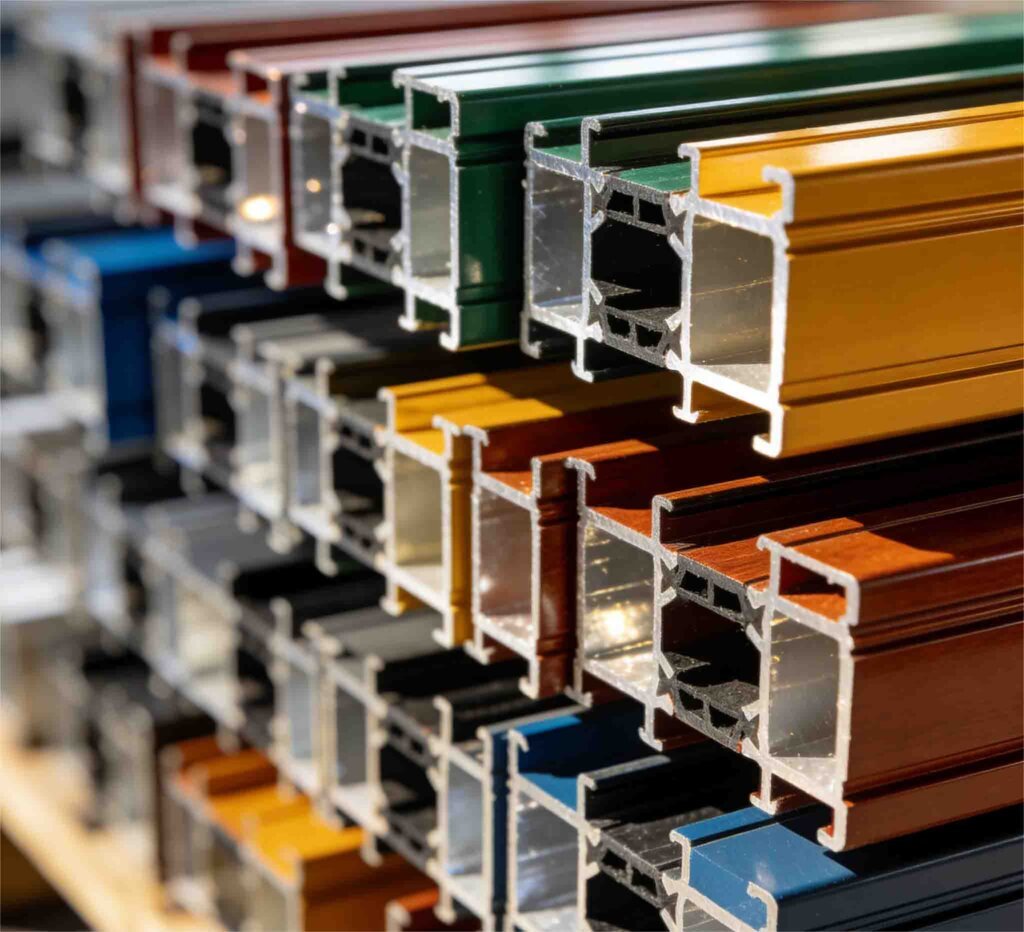
We eventually found a factory that specialized in coloured uPVC windows. They explained the process: co-extrusion, where the colour layer is bonded to the base uPVC during manufacturing. This wasn’t paint that could peel. It was integral to the profile itself.
We spent three weeks on colour selection. The homeowner wanted something bold but not screaming for attention. Anthracite grey—a deep, charcoal-like shade—won the vote.
But I’ll be honest: I was nervous. The factory gave us a 10-year fade warranty, but warranties are pieces of paper. Real life is harsh.
Three fears kept me awake:
The factory technical director sat me down and explained their stabilizer package—specifically designed for coloured uPVC windows in high-UV environments. He showed me accelerated weathering test results. He pointed to installations in Spain and Australia that were already five years old and looked pristine.
I was 70% convinced. The homeowner was 100% convinced. We moved forward.
This is the question I get asked most often: “Do coloured uPVC windows fade?”
The honest answer is nuanced.
Window A: South-facing, full sun exposure for 6-8 hours daily, no shade, no overhang. This window has absorbed more UV radiation in 10 years than most windows see in 20.
Window B: North-facing, shaded by a large tree, indirect light only.
When I put them side by side in 2026, can I see a difference?
Barely. And I mean barely.
On a cloudy day, they look identical. In direct sunlight, if I stare at the junction where the frame meets the wall, I might—might—detect that the south-facing window has warmed to a slightly softer, less intense grey. It’s not faded in the way cheap plastic lawn furniture fades. It’s more like the difference between a new pair of dark jeans and one that’s been washed 50 times.
Why? Because quality coloured uPVC windows use lightfast pigments and UV stabilizers. The colour isn’t a surface coating; it’s throughout the material. The factory’s 2016 prediction was accurate: you’d need 25+ years of UK weather to see meaningful fade.
Industry veterans love to warn about “chalking”—that white, powdery residue that allegedly appears on coloured uPVC as the surface degrades.
I’ve heard this warning at trade shows for 15 years. So during my inspection, I did something simple: I ran my bare hand along the south-facing frame, pressing firmly.
Result? My hand was clean. No powder. No residue. Nothing.
I tried it on the north-facing frames. Same result.
I wiped the frame with a black cloth. Clean.
The “chalking” boogeyman, at least with modern UPVC casement windows for sale from reputable factories, appears to be a myth. Perhaps it was true for early coloured profiles in the 1990s. But manufacturing has evolved. The co-extruded acrylic or foil finishes used today are remarkably stable.
Using a standard RAL colour chart, I’d estimate the deviation on the south-facing window is less than 5% after 10 years. The north-facing? Maybe 2%.
If you’re buying coloured uPVC windows from a factory that uses quality pigments and adequate UV stabilizers, colour fade should be the least of your worries.
Here’s where my assumptions were completely wrong.
I assumed dark grey frames would show every speck of dust, every rain streak, every pollen particle. I was preparing for a life of constant window cleaning.
Reality turned out much simpler.
| Frequency | Task | Products Used | Time Spent |
|---|---|---|---|
| Twice yearly | Full frame wash | Warm water, mild dish soap, soft cloth | 45 minutes (whole house) |
| As needed | Spot clean bird droppings | Damp cloth immediately | 2 minutes |
| Annually | Hinge and friction stay check | Silicone spray lubricant | 15 minutes |
| Every 5 years | Gasket inspection | Visual check only | 10 minutes |
Critical warning: Never use abrasive pads, scouring powders, or solvent-based cleaners on coloured uPVC windows. You’ll scratch the surface and permanently damage the finish. I’ve seen homeowners destroy beautiful grey frames in one afternoon with a magic eraser and good intentions.
The house is near a main road. Pollen season is brutal. On white windows, you’d see a distinct yellow-green layer after two weeks. It’s ugly. It screams “I don’t maintain my home.”
On these anthracite grey coloured uPVC windows, you have to stand 10 feet away and squint to notice the pollen. It blends in. The windows look presentable for months, even when they’re technically “dirty.”
After 10 years, the main compression gaskets are still flexible. No cracks. No brittleness. The factory used EPDM rubber, which resists UV and ozone degradation. Good choice. On the south-facing windows, the gaskets have lost maybe 20% of original “plumpness.” Still seal, but I’ll replace them at year 12 as routine.
These UPVC casement windows for sale from 2016 close with a solid, reassuring thud. The compression is even all around. The espagnolette locking mechanism engages smoothly without needing to force the handle.
Why? Stainless steel hinges and friction stays, not cheap painted steel. Stainless steel doesn’t corrode. After 10 years, the friction stay tension is identical to day one.
The locking handles show minor wear—the chrome plating has polished slightly where thumbs grip—but they function perfectly. No looseness.
I stood by each window on a cold January day with wind gusts over 30 mph. I held a thin piece of tissue paper near the seal junctions. Result: zero detectable drafts. The double glazing units are still clear. No seal failure. No condensation between the panes.
In 2016, these coloured uPVC windows cost approximately 18% more than equivalent white frames. That’s typical even today—the premium usually ranges from 15% to 25%, depending on colour complexity.
The homeowner sold in 2024. The agent mentioned the coloured uPVC windows as a selling feature. Buyers commented on how modern the house looked. It sold above asking.
Every time I visited, the homeowner pointed to the windows with pride. “Look how they catch the evening light.” The windows became a defining feature. That’s the real value—they transform a purely functional element into a design statement.
Ten years ago, I was nervous about coloured uPVC windows. Today, I’m a convert.
The anthracite grey frames I installed have maintained colour beautifully, required less visible maintenance, functioned flawlessly, and increased curb appeal. If you’re considering coloured frames, don’t let fear stop you. Modern coloured uPVC windows are engineered to perform. The key is choosing the right partner.
At Havenseek Window, we’ve spent 15 years perfecting coloured uPVC production. We’ve supplied coloured uPVC windows to clients in 50 countries. Our stabilizer packages are formulated for your climate.
Get samples in 7 days • Catalog includes 47 pages of specs, colour charts & pricing
References & further reading