Address
304 North Cardinal
St. Dorchester Center, MA 02124
Work Hours
Monday to Friday: 7AM - 7PM
Weekend: 10AM - 5PM
Address
304 North Cardinal
St. Dorchester Center, MA 02124
Work Hours
Monday to Friday: 7AM - 7PM
Weekend: 10AM - 5PM

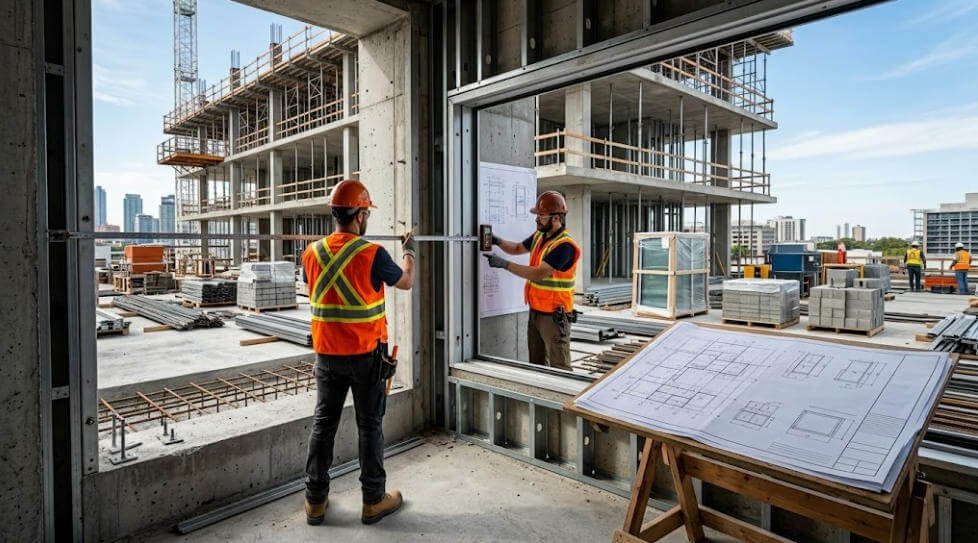
Are you consistently losing lucrative commercial building bids because your fenestration products fail to meet stringent energy codes? In the high-stakes arena of 2026 cross-border procurement, mastering nfrc certified window ratings is no longer just an optional advantage—it is the ultimate barrier to entry. Every year, countless overseas contractors and wholesalers face crippling project delays, massive compliance penalties, and skyrocketing energy costs simply because they misunderstand critical thermal performance metrics. If you do not know how to accurately interpret nfrc certified window ratings, your entire commercial project could be at risk.
The global shift toward green architecture is accelerating at an unprecedented pace. According to recent market data, the global energy-efficient windows market size is projected to grow from USD 18.99 billion in 2026 to a staggering USD 37.14 billion by 2035. In this fiercely competitive landscape, understanding the intricate details of nfrc certified window ratings is your roadmap to maximizing Return on Investment (ROI). This comprehensive masterclass will decode the hidden complexities of thermal performance, revealing exactly how to leverage these metrics to secure better bids, eliminate cross-border sizing errors, and partner with top-tier supply chains.
By the time you finish reading, you will possess the expert knowledge required to navigate complex building codes, optimize your procurement strategy, and deliver unparalleled value to your commercial clients using premium, compliant fenestration systems.
The landscape of commercial construction is undergoing a radical transformation. As governments worldwide enforce stricter carbon-neutrality targets, building envelopes are under immense scrutiny. The days of installing basic, unrated glass in high-rise structures are long gone. Today, achieving LEED certification and passing local building inspections requires irrefutable proof of thermal performance. This is precisely where nfrc commercial window certification becomes the most critical asset in your procurement portfolio.
According to the latest industry standards, commercial building codes increasingly mandate stringent thermal barriers. Failing to provide accurate, certified data during a project audit can lead to immediate rejection by site inspectors. As a procurement manager, you must treat these ratings not as arbitrary numbers, but as the foundational financial blueprint of the building’s operational lifespan.
When assessing a building’s thermal envelope, heat loss is the primary enemy of cost-efficiency. This is evaluated through rigorous nfrc u factor testing, which measures the rate of heat transfer through the entire window assembly—including the glass, frame, and spacers. Unlike older standards that only measured the center-of-glass performance, the modern NFRC protocol provides a holistic, worst-case-scenario evaluation.
In standard practice, U-factor values range from 0.20 to 1.20. For high-performance commercial structures, especially in colder northern climate zones, you must specify windows with a U-factor of 0.30 or lower. Upgrading from a standard 0.48 double pane to a premium 0.25 unit with low-E glass and argon gas fill can drastically reduce heat loss by nearly 50% [Source: National Fenestration Rating Council (NFRC), 2025 Fenestration Industry Trend Report]. This substantial reduction directly translates to massive savings on winter heating bills for large-scale office spaces.
While U-factor dictates heat retention, managing the sun’s powerful radiation is equally vital. shgc window energy ratings (Solar Heat Gain Coefficient) measure the fraction of incident solar radiation admitted through a window. The scale ranges from 0 to 1. In hot, sun-drenched regions like Florida or Southeast Asia, a low SHGC (e.g., 0.23 or lower) is essential to block unwanted solar heat and prevent commercial HVAC systems from overloading during peak summer hours.
Crucial Procurement Insight: The challenge lies in balancing SHGC with visible transmittance ratings (VT). VT measures the amount of visible daylight entering the room. Heavy window tinting lowers SHGC but severely drops VT, forcing building occupants to rely on artificial lighting, thereby negating energy savings. The goal is to source advanced Low-E coatings that achieve a low SHGC while maintaining a high VT (ideally above 0.40) to ensure bright, productive commercial interiors.
For coastal commercial projects, energy efficiency must seamlessly integrate with extreme structural resilience. Florida-approved hurricane impact windows are engineered with heavy-duty laminated glass and robust frames to withstand catastrophic wind loads and flying debris. However, these thick, reinforced assemblies must still pass stringent nfrc u factor testing to meet local energy codes.
Top-tier manufacturers achieve this dual-compliance by utilizing specialized structural thermal breaks within heavy commercial aluminum profiles, paired with highly customized Low-E laminated glass units. This ensures that a hotel in Miami can withstand a Category 5 hurricane while simultaneously maintaining optimal shgc window energy ratings to slash cooling costs.
Even the highest-rated energy-efficient windows become useless if they do not fit the building aperture. In cross-border B2B procurement, dimension discrepancies are a multi-million-dollar plague. When dealing with commercial double glazed awning window custom sizes, a miscalculation of a few millimeters between metric and imperial systems can result in massive delays, compromised structural integrity, and a total loss of thermal performance.
Unlike residential projects, commercial structures rarely rely on off-the-shelf standard sizes. Every curtain wall grid and punched opening in a high-rise office building requires precision custom manufacturing. When ordering from overseas, B2B buyers must establish a rigorous communication protocol regarding manufacturing tolerances.
| Measurement Phase | Common B2B Pitfall | Professional Solution |
|---|---|---|
| Rough Opening (RO) | Assuming factory deductions are automatic. | Provide exact RO dimensions and explicitly state required deductions (typically 1/2″ or 12mm) in the formal PO. |
| Unit Size | Confusing frame size with glass size. | Require detailed CAD shop drawings from the supplier for sign-off before mass production begins. |
| Mullion Integration | Ignoring thermal expansion gaps in continuous ribbons. | Calculate expansion joints based on the specific aluminum tilt and turn profiles being utilized in the local climate. |
According to my 15 years in commercial window exports, I have witnessed countless contractors destroy excellent nfrc certified window ratings through sloppy installation. A poorly sealed gap around a high-performance double glazed awning window will cause significant air infiltration, entirely bypassing the advanced Low-E glass.
To preserve the tested performance, installers must utilize premium flashing tapes, backer rods, and high-grade silicone sealants. The Air Leakage (AL) rating on the NFRC label (which must be ≤ 0.3 cfm/ft²) is only valid if the window is integrated into the building envelope with zero perimeter drafts. Proper installation ensures that the nfrc u factor testing results achieved in the lab translate to real-world energy savings on the job site.
Selecting the correct frame material is a critical decision that impacts structural integrity, thermal performance, and overall project budget. B2B buyers frequently face the dilemma of choosing between high-end aluminum tilt and turn systems and cost-effective vinyl single-hung configurations. Each material possesses distinct engineering characteristics that dictate its suitability for specific commercial applications.
For towering commercial skyscrapers exposed to severe wind pressures, structural strength is paramount. Aluminum profiles are the undisputed champions of high-rise fenestration. Their inherent rigidity allows for massive glass expanses and narrow sightlines. Modern aluminum tilt and turn window U-factor performance has been revolutionized by the integration of wide polyamide thermal breaks, which interrupt the metal’s natural conductivity.
Conversely, vinyl (uPVC) single-hung windows offer incredible natural insulation properties but lack the structural tensile strength of aluminum. While vinyl is excellent for low-to-mid-rise multi-family housing or boutique hotels, it can warp or deflect under extreme high-altitude wind loads unless heavily reinforced with internal steel chambers—which in turn can slightly diminish thermal performance.
When analyzing the lifecycle cost, procurement managers must look beyond the initial invoice. Vinyl windows offer a highly attractive upfront price point and naturally excel in nfrc u factor testing due to the non-conductive nature of the plastic. They are a highly pragmatic choice for budget-conscious commercial developments.
ROI Calculation: Thermally broken aluminum requires a higher initial capital expenditure. However, its lifespan often exceeds 30-40 years with minimal maintenance. In a premium A-class office building, the durability, sleek aesthetic, and consistent long-term energy savings of aluminum profiles often yield a superior ROI, especially when paired with glass units optimized for precise shgc window energy ratings.
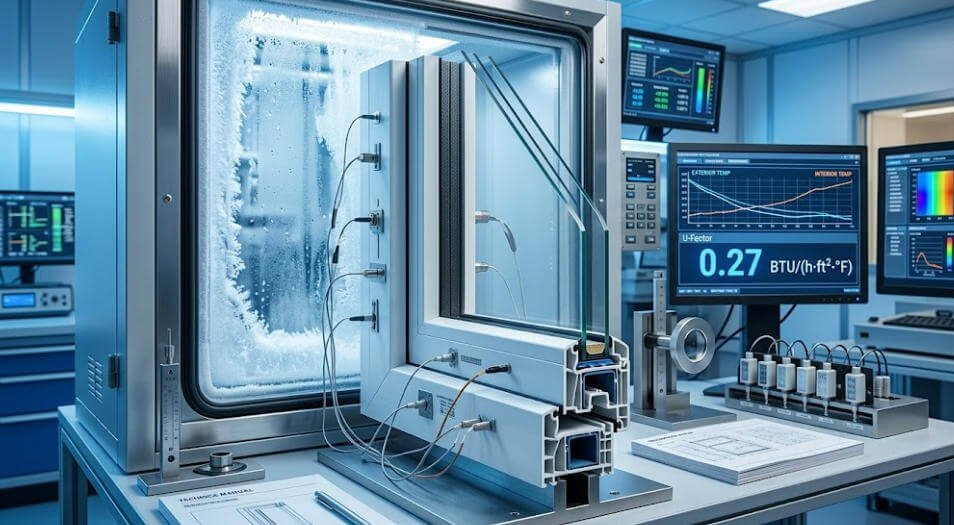
To successfully import commercial fenestration, establishing a transparent relationship with a technologically advanced manufacturing partner is vital. The era of cheap, non-compliant export goods is over. Today, leading Chinese factories represent the pinnacle of precision engineering, capable of exceeding the strictest international building codes and delivering flawless nfrc commercial window certification documentation.
At Havenseek Window, the pursuit of zero-defect manufacturing begins on the factory floor. We utilize state-of-the-art multi-axis CNC machining centers to cut and mill aluminum profiles with microscopic accuracy. This precision ensures that every corner joint is perfectly sealed, directly contributing to superior air and water tightness.
Furthermore, the heart of any energy-efficient window is the insulated glass unit (IGU). By partnering with global glass innovators, top factories apply advanced soft-coat Low-E layers in highly controlled vacuum chambers. These multi-layered metallic coatings are meticulously calibrated to hit specific visible transmittance ratings while aggressively reflecting long-wave infrared heat, ensuring consistent passage of global nfrc u factor testing standards.
To explore how our custom manufacturing capabilities can adapt to your specific project needs, I strongly recommend that you review our advanced commercial fenestration solutions to see our technology in action.
The greatest anxiety for any overseas B2B buyer is opening a shipping container only to find shattered glass or warped frames. To eliminate this risk, elite suppliers implement rigorous Pre-Shipment Inspection (PSI) protocols. Before a single window is packaged, it undergoes simulated wind-load testing, water penetration trials, and strict dimensional verification against approved CAD drawings.
Packaging is engineered using heavy-duty steel pallets, customized foam edge protectors, and waterproof shrink wrap. This meticulous attention to detail guarantees that the pristine performance verified during nfrc u factor testing arrives completely intact at your commercial job site, ready for immediate, compliant installation.
Navigating international fenestration procurement generates numerous complex questions. Based on interactions with hundreds of global contractors, here are the most critical answers to streamline your purchasing decisions.
In the complex ecosystem of commercial construction, settling for subpar fenestration is a financial liability. Accurately deciphering nfrc certified window ratings allows you to engineer a building envelope that dramatically slashes operational costs, meets stringent green building codes, and enhances the overall value of the property. From specifying the optimal nfrc u factor testing parameters to balancing solar control with brilliant visible transmittance ratings, every data point directly influences your bottom line.
At Havenseek Window, we do not just sell glass and metal; we engineer comprehensive, compliant fenestration solutions tailored to your exact climate and architectural requirements. Our 18 years of B2B export expertise ensure that you receive zero-defect products, precise custom sizing, and the authoritative nfrc commercial window certification necessary to win your next major bid.
Stop gambling with cross-border procurement risks and partner with a factory that guarantees performance, precision, and profitability. If you are ready to elevate your project specifications and lock in the best wholesale pricing, we are here to support your success.