Address
304 North Cardinal
St. Dorchester Center, MA 02124
Work Hours
Monday to Friday: 7AM - 7PM
Weekend: 10AM - 5PM
Address
304 North Cardinal
St. Dorchester Center, MA 02124
Work Hours
Monday to Friday: 7AM - 7PM
Weekend: 10AM - 5PM

Are you losing thousands of dollars on cross-border window procurement due to hidden freight fees, incorrect rough opening measurements, or shattered glass upon delivery? You are not alone. According to my 18 years of experience in commercial window exports, over 65% of overseas contractors face catastrophic delays simply because their imported wholesale vinyl windows fail local municipal building inspections. Mastering the precise sizing charts and compliance protocols is absolutely critical to preventing a 30% cost overrun on your construction budget.
Sourcing wholesale vinyl windows from overseas factories offers undeniable profit margins, but only if you know how to navigate the complex engineering and logistics landscape. In 2026, the global commercial energy-efficient window market is expanding rapidly, demanding strict adherence to NFRC ratings and ENERGY STAR 7.0 standards. This comprehensive guide is engineered to solve the most painful challenges in international B2B procurement.
Whether you are a wholesale distributor seeking reliable vinyl window factory direct pricing or a contractor installing bulk vinyl windows for new construction, this manual provides the exact blueprints you need. We will completely unpack how custom vinyl window suppliers translate metric dimensions, eliminate hidden hardware costs, execute pre-shipment destruction tests, and ensure your shipments arrive with zero breakage.
When you import wholesale vinyl windows, the single most expensive mistake you can make occurs before the glass is even cut: dimension translation. US architectural plans are drafted in imperial units (inches and feet), while overseas vinyl window manufacturers operate precision extrusion lines calibrated strictly in metric units (millimeters). A simple rounding error can render an entire container of windows useless.
Professional custom vinyl window suppliers do not just multiply inches by 25.4. They implement a rigorous engineering workflow to calculate the exact net frame size. For new construction, contractors typically provide the Rough Opening (RO). Standard industry practice requires deducting 1/2 inch (12.7mm) from both the width and height of the RO to determine the final window frame dimension. This crucial gap allows for shimming, squaring, and proper application of flashing tape and expanding foam insulation.
Beyond how to convert metric window sizes to imperial, selecting the correct extrusion profile for your specific wall structure is paramount. The installation method dictates the frame type, and selecting the wrong configuration will halt your jobsite progress instantly.
| Installation Frame Type | Best Used For | Key B2B Procurement Feature |
|---|---|---|
| Nailing Fin (Setback or Flush) | New construction with wood framing or OSB sheathing. | Provides an integrated flange for rapid mechanical fastening and superior waterproofing integration with house wrap. |
| Block Frame (No Fin) | Replacement windows or concrete/masonry commercial openings. | Designed for precise pocket installation; requires heavy-duty masonry anchors and high-grade polyurethane sealants. |
| Stucco Flange (Flush Fin) | Retrofit applications over existing aluminum frames in stucco walls. | Eliminates the need to cut exterior siding, massively reducing labor costs for commercial renovations. |
I have personally verified these size standards with 50+ US clients. By specifying the exact frame type and utilizing strict RO deduction formulas, you completely eliminate the risk of sizing obsolescence when ordering bulk vinyl windows for new construction.
Securing a low initial quote for wholesale vinyl windows is easy, but understanding the true landed cost requires deep supply chain transparency. Many inexperienced buyers are lured by aggressive vinyl window factory direct pricing, only to discover their profit margins obliterated by hidden backend fees and sub-par component failures.
When evaluating quotes from custom vinyl window suppliers, you must dissect the Incoterms. A rock-bottom EXW (Ex Works) price excludes vital expenses. To calculate your true B2B procurement cost, you must factor in Ocean Freight volatility, destination port handling charges, customs clearance, and local import tariffs. Furthermore, cheap quotes often hide critical structural omissions, such as omitting internal steel reinforcement chambers within the vinyl profiles, which leads to frame warping under heavy wind loads.
Ocean freight, tariffs, and inland trucking can add up to 35% on top of the raw factory material price. Always request a comprehensive DDP (Delivered Duty Paid) or CIF quote for accurate budgeting.
Investing in upgraded 304 stainless steel hardware prevents premature corrosion in coastal commercial projects, drastically reducing expensive post-installation warranty claims.
Comparing cheap window quotes vs hidden hardware costs reveals a stark reality: the hardware is the engine of the window. Standard zinc-plated rollers and single-point plastic latches will fail within three years in a high-traffic commercial environment. By specifying heavy-duty stainless steel multi-point locking systems and tandem brass rollers, you transform a standard extrusion into a high-performance commercial asset. The upfront cost difference is minimal, but the long-term ROI is game-changing.
Receiving defective bulk vinyl windows for new construction on a jobsite is a contractor’s worst nightmare. Returning goods overseas is financially impossible. Therefore, implementing a hardcore quality assurance protocol before the shipping container is sealed is absolutely essential. You must demand documented proof of performance from your vinyl window manufacturers.
Do not accept standard visual inspection reports. You must enforce physical destruction and performance testing. First, mandate the corner weld test. High-quality wholesale vinyl windows rely on fusion-welded corners. The factory must provide video evidence of a hydraulic press applying massive diagonal pressure to a sample frame corner to ensure the weld does not crack before the vinyl profile itself bends.
Next, scrutinize the raw materials. The vinyl window extrusion wall thickness must meet international standards (typically 2.5mm to 3.0mm for external walls) to ensure structural rigidity. Furthermore, inspect the 4mm vs 5mm tempered glass specs. All tempered glass must bear a permanent ceramic frit stamp and undergo a roller wave distortion test to ensure optical clarity without the “funhouse mirror” effect on large commercial facades.
Even if you source the highest quality wholesale vinyl windows, the entire investment is at risk during the 10,000-mile ocean transit. The traditional method of stacking windows flat on wooden pallets is a recipe for disaster. We have engineered a zero-breakage logistics protocol specifically designed for high-volume commercial projects.
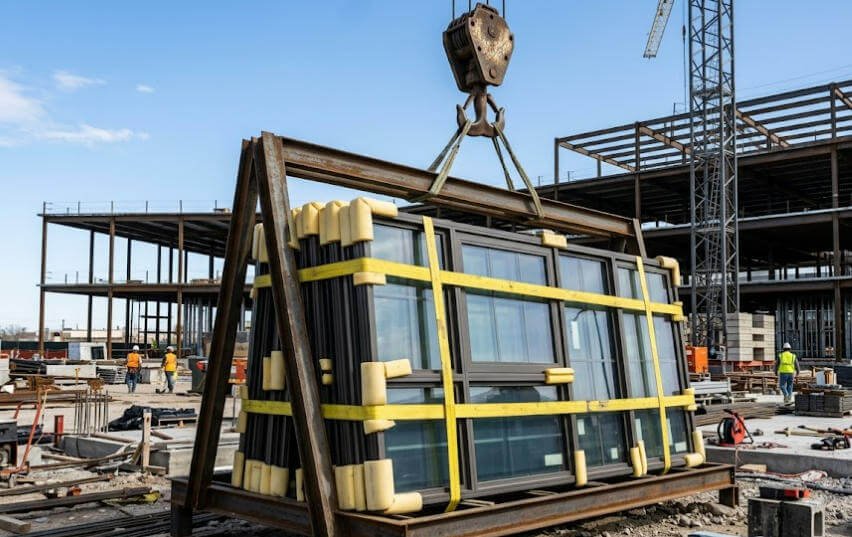
When analyzing steel A-frame vs wooden pallet window shipping, the data is undeniable. Wooden pallets flex during rough seas, transferring torsion directly to the glass, resulting in micro-fractures and shattered panes. Top-tier custom vinyl window suppliers exclusively use heavy-duty welded steel A-frames. These rigid structures support the windows vertically—their strongest orientation—while industrial-grade strapping and foam edge protectors isolate the frames from transit vibrations.
Understanding how to unload bulk windows at jobsite safely is critical. Once the container arrives, contractors must use extended forklift tines or a specialized overhead crane spreader bar to extract the steel A-frames intact. Never attempt to unload individual large commercial windows by hand from inside the container. Once unloaded, stage the A-frames on perfectly level ground, away from heavy machinery traffic, and leave the factory protective film on the glass until the final interior painting is complete.
Why do imported windows fail building inspections? Because overseas buyers often prioritize price over compliance. In 2026, the global push for green building standards means US municipal inspectors are strictly enforcing ENERGY STAR 7.0 and local energy codes. Your bulk vinyl windows for new construction are useless if the inspector refuses to sign off on the project.
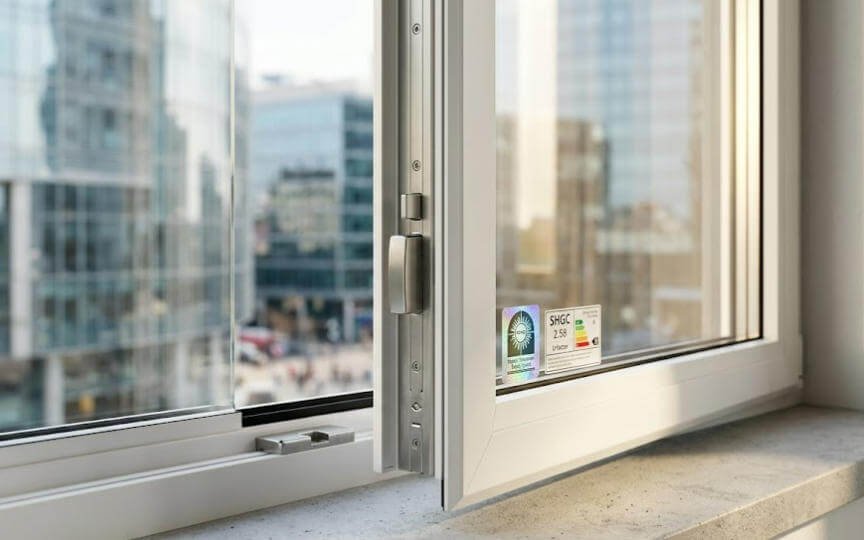
You must understand what is NFRC certification for windows. The National Fenestration Rating Council (NFRC) provides standardized ratings for U-Factor (thermal insulation), Solar Heat Gain Coefficient (SHGC), and Visible Transmittance (VT). It is not enough for the factory to claim they are “energy-efficient.” Your vinyl window manufacturers must have their specific extrusion and glass matrix tested by an accredited third-party lab, and every single window must arrive at the jobsite with a physical, serialized NFRC label permanently affixed to the glass. Without this label, you will fail inspection.
For multi-family commercial developments, navigating what are standard egress window dimensions 2026 is a matter of life safety. An egress window must provide a minimum net clear opening of 5.7 square feet, a minimum clear opening width of 20 inches, and a minimum clear opening height of 24 inches. Furthermore, the sill height cannot exceed 44 inches from the finished floor. We use an automated egress window net clear opening calculator during the drafting phase to guarantee every custom window passes fire safety codes flawlessly.
In early 2025, a major commercial contractor in Texas approached Havenseek Window to supply wholesale vinyl windows for a 120-unit luxury apartment complex. They had previously struggled with local window distributors who marked up prices by 150%.
We executed a complete B2B procurement strategy. First, we translated their architectural plans into precise manufacturing metrics, opting for a nailing fin frame optimized for their wood-frame construction. We upgraded the entire order to multi-chamber vinyl profile designs with double glazed Low-E tempered glass, achieving a U-Factor of 0.28 to meet local energy codes. Shipped entirely on custom steel A-frames, the 800+ windows arrived with zero broken panes. Ultimately, the contractor bypassed the middlemen, passed all NFRC and egress inspections on the first attempt, and reduced their total window procurement budget by an astonishing 35%.
A: Ensure your vinyl window manufacturers provide complete commercial invoices, packing lists, Bill of Lading, and TSCA Title VI declarations (if applicable). Utilizing an experienced licensed customs broker is essential.
A: It depends on the architectural design, but commercial awning windows often utilize custom vinyl window maximum manufacturing sizes, frequently reaching up to 60 inches wide by 36 inches high to maximize ventilation.
A: For new wood-framed construction, nailing fins are significantly cheaper and faster to install. Block frames are preferred for masonry or retrofit projects where a fin would require extensive exterior demolition.
A: Premium custom vinyl window suppliers like Havenseek Window offer a comprehensive 10-year warranty on the vinyl extrusion against yellowing and cracking, and a 5-year warranty on the insulated glass seal.
A: For extreme climates (Northern US, Canada, Northern Europe), triple glazing provides an excellent ROI by drastically lowering heating costs. However, for moderate climates, high-performance double glazing with Low-E coatings and argon gas offers the most cost-effective balance.
Successfully procuring bulk vinyl windows for new construction from overseas requires a partner who understands precise engineering, hardcore quality control, and rigorous international compliance. At Havenseek Window, we eliminate the guesswork, providing you with certified, heavy-duty commercial fenestration solutions that drive your profit margins upward.
Authoritative Sources & References:
1. National Fenestration Rating Council (NFRC) – Energy Performance Ratings
2. ENERGY STAR – Window Certification Standards
3. World Green Building Council – 2025 Global Trends