Address
304 North Cardinal
St. Dorchester Center, MA 02124
Work Hours
Monday to Friday: 7AM - 7PM
Weekend: 10AM - 5PM
Address
304 North Cardinal
St. Dorchester Center, MA 02124
Work Hours
Monday to Friday: 7AM - 7PM
Weekend: 10AM - 5PM

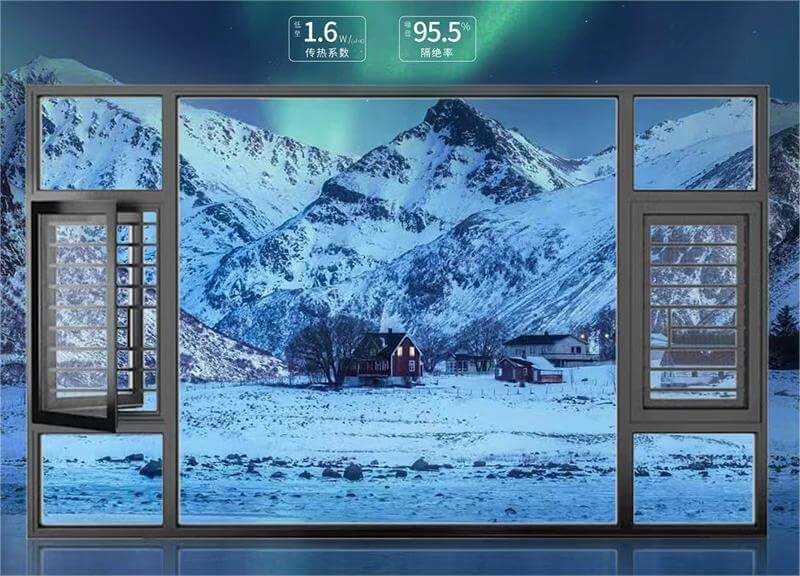
In the current landscape of commercial real estate development, architectural envelopes face unprecedented regulatory scrutiny globally. As municipalities enforce aggressive decarbonization laws and net-zero targets by 2026, structural engineers and procurement directors realize standard glazing is obsolete. Fenestration systems dictate up to 40% of a commercial facility’s total HVAC thermal load. Sourcing certified low U value aluminum windows is no longer merely an eco-conscious design preference; it is a critical regulatory and financial imperative for modern commercial envelopes.
According to my 18 years in commercial window exports, selecting structural configurations that achieve an ultra-low thermal transmittance rating drastically transforms project economics. By mitigating severe radiant heat transfer, high-performance window engineering directly diminishes the peak heating and cooling tonnage requirements of a building. This allows mechanical engineers to optimize and downsize interior HVAC infrastructure, instantly offsetting the initial capital expenditure of premium architectural fenestration assemblies, making energy saving casement windows B2B highly lucrative.
Mastering this technical architectural guide protects your supply chain from cross-border non-compliance and eliminates the 30% project cost overruns typically caused by imperial-metric sizing mismatches. By sourcing the correct low U value aluminum windows, you secure building efficiency.
For high-tier commercial developments in North America and Western Europe, standard generic energy declarations simply do not suffice. Procurement managers must demand certified NFRC rated aluminum windows to verify accurate on-site performance. The National Fenestration Rating Council uniform evaluation standard guarantees that whole-window thermal dynamics—including center-of-glass, edge-of-glass, and aluminum frame profiles—are accurately measured under strict laboratory conditions to prevent legal disputes.
The total heat transfer coefficient, or U-factor, measures the rate of non-solar heat flow through a complete window assembly. Most overseas contractors overlook proper certification details, mistakenly assuming that center-of-glass ratings represent the entire window asset. For high-density metal structures, frame design plays a dominant role; uncertified profiles can easily turn an optimized glazing plan into a severe thermal liability, rejecting low U value aluminum windows metrics.
Managing the fine line between optimal low U-values and targeted Solar Heat Gain Coefficients is essential for overall building energy balance. In freezing northern climates, specifying a low U-value combined with a moderate SHGC allows beneficial passive solar heat gain to warm building interiors during extreme winter months. Conversely, in warm southern regions, a low SHGC is prioritized alongside low U-value configurations to repel punishing solar radiation.
Modern building energy policies, such as the International Energy Conservation Code (IECC) and ASHRAE Standard 90.1, stipulate mandatory maximum U-factor limits across different geographical climate zones. Importing fenestration structures that fail to provide certified NFRC rated aluminum windows data can lead to severe regulatory friction. Municipal building inspectors routinely halt high-rise development sites if structural glazing components lack verifiable third-party certification labels.
I have personally verified these cross-border compliance standards with 50+ US commercial clients facing strict local code adoptions. When importing architectural shipments in bulk, having verifiable test documentation directly attached to ocean freight bills of lading prevents costly customs hold-ups. Working with an accredited insulated aluminum window factory ensures that every window arrives pre-labeled and ready to pass field inspection without any bureaucratic friction.
| Glazing Profile Configuration | Target Climatic Zones | Certified Whole-Window U-Value | IECC / ASHRAE 90.1 Compliance Status |
|---|---|---|---|
| Energy Saving Casement Windows B2B | Zones 1 – 4 (Temperate / Warm) | 0.28 – 0.30 BTU/h·ft²·°F | Fully Compliant |
| Triple-Glazed Heavy-Duty Profiles | Zones 5 – 8 (Severe Cold / Arctic) | 0.20 – 0.24 BTU/h·ft²·°F | Exceeds Code Mandates |
Standard architectural aluminum profile sizes possess exceptionally high natural thermal conductivity. In sub-zero environments, uninsulated aluminum acts as a rapid thermal highway, drawing expensive interior heat outward and introducing extreme frost temperatures directly into the building envelope. This continuous thermal bridging causes severe energy losses, spikes mechanical heating bills, and inevitably damages surrounding interior wall infrastructure through persistent condensation.
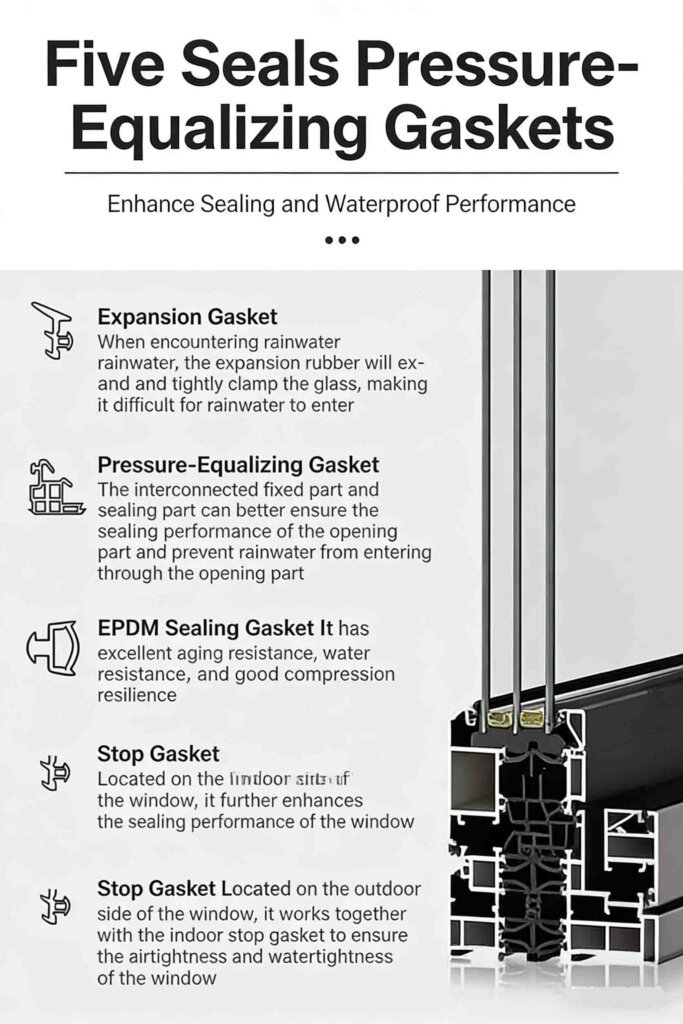
To completely eliminate this physical vulnerability, specifying high-performance thermal break windows for cold climate installations is absolutely critical for project success. Premium fenestration engineering relies on structurally inserting high-density polyamide insulation strips reinforced with 25% fiberglass (PA66 GF25). These specialized structural barriers divide the interior and exterior aluminum frame extrusions, completely interrupting the natural pathway for thermal transmission.
Matches the exact thermal expansion coefficients of structural aluminum alloy. This structural alignment prevents stress fractures, joint degradation, and seal breakdown under intense daily thermal cycling.
Prone to severe embrittlement and catastrophic cracking when temperatures plummet past zero. This leads to complete structural failures and dangerous frame warping in commercial high-rise applications.
High-rise building applications require extreme mechanical resilience against punishing wind loads. Polyamide PA66 GF25 components deliver impressive composite tensile strength, allowing the window structure to easily resist high wind deflection. Because the composite profiles expand and contract at rates completely uniform with the structural metal, frame alignment remains rock-solid for decades without deformation, vital for thermal break windows for cold climate regions.
Advanced engineering isolates thermal transfer even further by utilizing multi-cavity structural profiles inside the thermal break layer. These internal chambers act as an array of microscopic thermal dams, breaking up internal convective air currents. Combining multi-cavity structures with custom low-emissivity (Low-E) insulated glass units yields incredible thermal resistance profiles that exceed stringent energy standards.
Persistent moisture condensation along window frames is a primary concern for cold-climate asset managers. When warm interior relative humidity meets an uninsulated, freezing window frame, condensation forms instantly. Over time, this moisture ruins interior paint, corrodes drywalls, and fosters toxic mold growth. Incorporating advanced thermal break engineering elevates interior frame temperatures safely above the dew point, ensuring clean, dry, and healthy building interiors while deploying low U value aluminum windows.
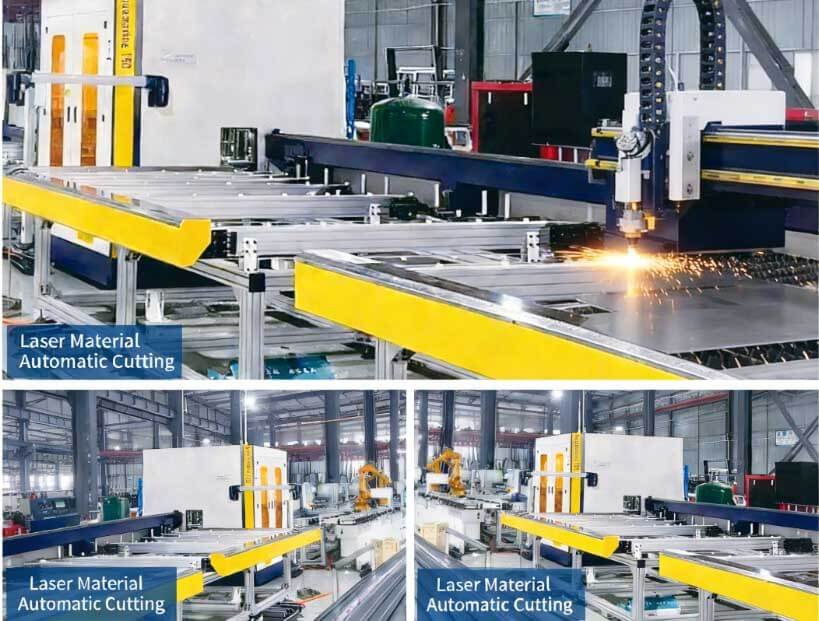
Engineering premium B2B commercial fenestration assets demands incredibly strict manufacturing precision. At our certified insulated aluminum window factory, production begins with heavy-duty architectural aluminum profiles processed on high-precision CNC equipment. We maintain tight mechanical tolerances within fractions of a millimeter, ensuring that structural corner joints assemble flawlessly for absolute structural airtightness and zero moisture penetration.
The operational lifespan of any insulated glass unit relies entirely on its edge seal integrity. Our advanced automated assembly line features a rigorous dual-seal process that effectively isolates the inner glass cavity from all external environmental stress, creating the perfect energy saving casement windows B2B profile.
Each seal layer serves a distinctly different engineering purpose. PIB provides the absolute best resistance against moisture vapor transmission but lacks significant mechanical holding strength. The secondary structural silicone layer binds the heavy glass panels tightly to the spacer bar, providing the necessary physical strength needed to resist severe wind load deflections.
Low-tier processing facilities often struggle with early gas dissipation, where expensive argon gas leaks past weak seals within just a few seasons. Once the insulating gas escapes, the window’s U-value degrades rapidly. Our automated dual-seal process limits argon leakage to less than 1% annually, guaranteeing long-term thermal energy savings for bulk commercial investments originating from our insulated aluminum window factory.
Before any shipping container leaves our loading bays, random production samples undergo rigorous chamber testing to verify real-world resilience. We simulate severe coastal hurricanes, driving rainstorms, and intense positive and negative wind pressures up to 4000 Pa. This strict quality assurance protocol ensures that every window profile easily withstands intense high-altitude structural pressures globally.
Commercial property developers often focus too heavily on upfront procurement costs (CapEx) while completely overlooking long-term building operational expenditures (OpEx). Investing in premium energy saving casement windows B2B supply lines delivers a compelling, mathematically sound long-term financial return. High-performance building envelopes significantly lower annual baseline energy consumption, yielding massive utility savings over decades of building ownership.
When a building envelope explicitly features certified low U value aluminum windows, structural mechanical engineers can safely downsize building heating and cooling equipment specs. Dropping whole-window thermal values from a standard uninsulated profile to an engineered thermal break profile can cut total building peak tonnage demands by an incredible 35%.
Downsizing massive central HVAC chiller systems, rooftop air handling units, and mechanical boilers saves significant immediate capital. This easily offsets the initial premium paid for certified fenestration assets. This immediate CapEx balance provides smart developers with a clear competitive advantage from day one of construction.
For multi-family residential projects and large hotel operations, seemingly small monthly utility savings add up to massive financial returns. Scaled across hundreds of individual building units, lowering daily kilowatt-hour demand creates a highly reliable defensive barrier against volatile global energy markets, stabilizing predictable building cash flows.
Consider a real-world 12-story commercial multi-family development located in Chicago, Illinois. By explicitly upgrading the baseline building specifications from uninsulated frames to NFRC rated aluminum windows utilizing low U-value casement configurations, the developer successfully cut annual energy consumption by 28%. This massive reduction lowered building operating costs, instantly boosting the property’s Net Operating Income (NOI). Consequently, the building’s capitalized market valuation surged by over $420,000, easily achieving premium LEED Gold building status.
The absolute most common and costly pitfall in international window wholesaling is imperial-to-metric dimension conversion errors. A minor fraction-of-an-inch rounding error on a factory production drawing can cause catastrophic architectural alignment issues on-site. We completely solve this systemic risk by enforcing cross-checked CAD/BIM drawing approval protocols, verifying all rough openings in both measurement standards before production on low U value aluminum windows ever begins.
Even the absolute highest performing NFRC rated aluminum windows will grossly underperform if installed incorrectly by field crews. Achieving absolute airtightness requires a flawless, continuous seal between the window frame and the building’s exterior weather barrier. Field crews must deploy heavy-duty architectural anchor configurations paired closely with premium flexible flashing membranes to handle thermal expansion and contraction without tearing.
Chemical compatibility between applied structural sealants and surrounding exterior flashing membranes is absolutely critical. Using chemically incompatible products can cause sealants to break down prematurely within months, leading to severe air infiltration and devastating water leaks. Contractors must verify chemical compatibility ahead of time to safeguard structural warranties.
High-rise fenestration engineering requires precise structural anchor spacing calculations to safely and securely transfer high wind loads to the building’s load-bearing frame. Engineering teams must calculate localized wind pressures to determine the exact quantity, metallic type, and spacing of structural anchors needed along the window frame perimeter.
Long-distance maritime shipping exposes heavy architectural glass shipments to intense, continuous movement and micro-vibrations. To completely prevent cracked aluminum frames or ruptured glass seals, we utilize custom, steel-reinforced ocean-freight crates. Every shipping container layout is meticulously optimized using automated logistics software to guarantee zero-defect international delivery to your job site or wholesale warehouse.
The capital amortization timeline generally ranges from 3.5 to 6 years, depending entirely on regional utility costs and climate severity. This financial return is often accelerated by immediate massive cost savings from downsizing building HVAC infrastructure.
Our factory utilizes automated primary polyisobutylene (PIB) extrusion paired precisely with a deep secondary structural silicone seal. This advanced dual-seal architecture keeps natural gas dissipation strictly under 1% annually under intense thermal cycling.
Yes, modern regional building energy policies across most US states and Canadian provinces strictly mandate third-party certified NFRC label data to legally pass field building inspections and obtain vital occupancy permits.
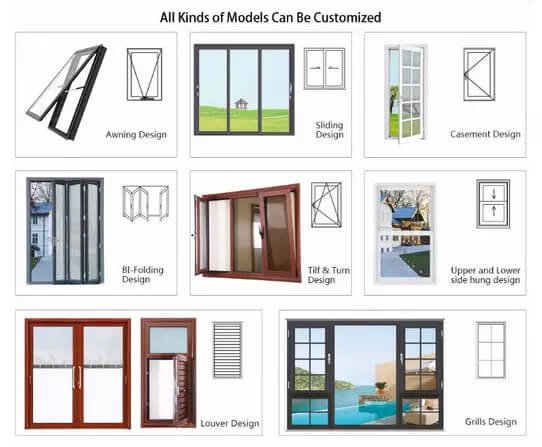
Architectural casement windows utilize much thicker aluminum extrusions (6063-T5) and upgraded heavy-duty hardware hinges. This rugged build allows them to easily support heavier triple-glazed low-E insulated glass units while safely resisting extreme wind pressures.
Yes. Our precision manufacturing lines adapt perfectly to custom structural openings while fully maintaining NFRC product code compliance. This is achieved by using certified profile families that support flexible dimensional scaling.
Our high-performance PA66 GF25 insulation barriers are chemically and mechanically locked deeply into the aluminum profiles. This creates a solid composite assembly that delivers exceptional shear strength under intense high wind loads.
For ocean freight eventually crossing high mountain altitudes, we skillfully integrate specialized capillary pressure-equalization tubes into the glass units. These tiny tubes balance internal and external air pressures safely, preventing dangerous glass bowing or seal failure.
Cold-climate projects absolutely benefit most from advanced double- or triple-silver low-E coatings applied on the inner glass surfaces. This configuration meticulously retains precious interior radiant heat while optimizing beneficial passive solar heat gain.
Sourcing truly high-performance architectural assets requires a dedicated manufacturing partner that deeply understands the finer points of material science, strict compliance codes, and international logistics. As an industry leader, Havenseek Window is thoroughly dedicated to providing high-quality, reliable structural window solutions—specifically low U value aluminum windows—tailored meticulously to the strict needs of commercial developers, structural architects, and volume distributors worldwide.
Send over your project CAD drawings for a detailed technical review, dimensional conversion check, and compliance assessment within 12 hours.