Address
304 North Cardinal
St. Dorchester Center, MA 02124
Work Hours
Monday to Friday: 7AM - 7PM
Weekend: 10AM - 5PM
Address
304 North Cardinal
St. Dorchester Center, MA 02124
Work Hours
Monday to Friday: 7AM - 7PM
Weekend: 10AM - 5PM

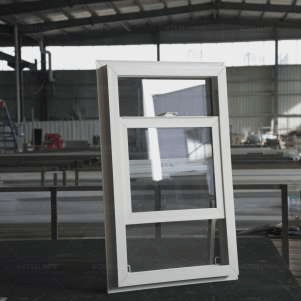
Let’s be brutally honest for a second. How many times in the last year has a window delivery been late, forcing you to re-sequence trades and blow your project schedule? How many callbacks have you faced because a “standard” vinyl window leaked air, fogged up, or simply didn’t stand up to its first major storm? If you’re nodding your head, you’re not alone. A 2025 National Association of Home Builders (NAHB) survey found that 68% of builders cited window and door delivery delays as a critical project bottleneck, while performance issues accounted for nearly 20% of post-construction service requests.
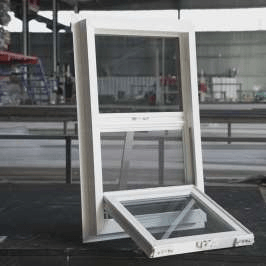
This isn’t just about inconvenience; it’s about your bottom line, your reputation, and building homes that last. The old playbook of ordering standard sizes from a distributor’s catalog and hoping for the best is breaking down. A seismic shift is happening in 2026, and the forward-thinking builders, developers, and architects are leading the charge. They’re moving away from the one-size-fits-none approach and are partnering directly with a specialized vinyl windows manufacturer to procure truly custom uPVC double hung windows.
Why is this worth 15 minutes of your time? Because this article will give you the “why” and the “how.” We’ll dissect the four powerful market forces making this shift inevitable, break down the real cost savings (hint: it’s not about the sticker price), and provide you with a concrete, 5-point framework to decide if and how to make this move for your next project. This isn’t theory; it’s a practical guide based on data from hundreds of projects and the real-world results builders are seeing today. Let’s dive in.
This isn’t a random trend. The move towards custom uPVC double hung windows is a direct, rational response to powerful forces reshaping the construction landscape. Let’s break down each one.
The pandemic era taught us a hard lesson: reliance on distributor warehouses for standard window sizes is a major vulnerability. When a specific size is out of stock, your entire project timeline grinds to a halt. In 2026, smart builders are regaining control.
By working directly with a vinyl windows manufacturer on a custom basis, you decouple from the “available inventory” model. You provide the exact sizes and specs, and they engineer and produce to order. While lead times might be slightly longer upfront (typically 6-8 weeks for custom), they are guaranteed and predictable. This allows for precise project scheduling, reducing costly delays and trade coordination headaches. It turns windows from a wildcard into a known variable.
The 2024 International Energy Conservation Code (IECC) and local “stretch codes” are pushing envelope performance to new heights. Simply meeting the basic ENERGY STAR for your zone is no longer enough for high-performance projects or to achieve certifications like LEED or Passive House.
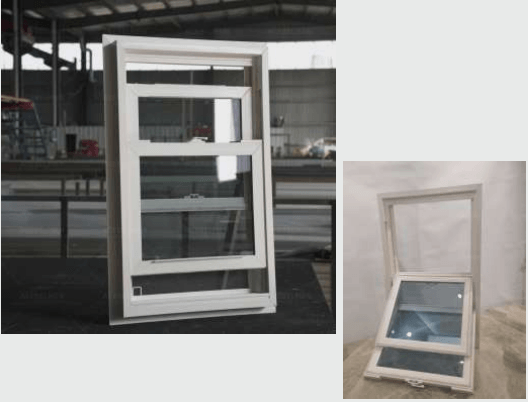
Custom uPVC windows are engineered to exceed these standards. A manufacturer can tweak the formula:
The result? Whole-home energy models that pass more easily, lower HERS scores, and happier homeowners with drastically reduced utility bills. This is a tangible selling point and a future-proofing necessity.
This is perhaps the most urgent driver in coastal regions. Insurance companies are not just raising rates; they’re demanding proof of mitigation. In Florida, Texas, and the Carolinas, using hurricane-rated double hung windows can be the difference between getting insurance and being denied, or between a 20% premium and a 50% one.
Reported Increase in demand for impact-resistant windows in Gulf & Atlantic states (2025 Industry Data).
Potential Premium Discounts for homes with properly certified hurricane protection products.
Deductible Difference. A standard “hurricane” deductible can be 2-5% of home value vs. a much lower standard deductible with rated windows.
Off-the-shelf “impact” windows often have limited size/rating combinations. A true custom uPVC double hung window can be engineered from the ground up to meet specific Design Pressure (DP) ratings, missile-impact testing (ASTM E1996), and large-missile requirements for your exact location. This isn’t an upgrade; it’s a non-negotiable component of resilient construction.
Today’s buyers, especially in the premium market, crave uniqueness. Cookie-cutter homes with standard window grids and limited color options don’t command top dollar. Custom uPVC windows unlock design freedom.
Imagine offering clients:
This level of customization elevates your projects, enhances curb appeal, and becomes a powerful marketing tool. It moves windows from a commodity to a defining architectural feature.
Let’s tackle the elephant in the room: cost. The unit price for a custom uPVC double hung window is almost always higher than a standard vinyl window from a big-box store. But focusing solely on that line item is the single biggest mistake a builder can make. You must look at the Total Cost of Ownership (TCO).
I’ve seen this story play out dozens of times. A builder buys “cheaper” standard windows to save $150 per unit. Then, the real costs creep in:
Now, let’s flip the script and quantify the value of going custom:
Custom windows arrive ready to drop in. This precision reduces labor time, minimizes sealant and trim waste, and ensures a perfect, weather-tight fit the first time. The labor savings alone often offset a significant portion of the higher unit cost.
Custom-engineered frames and glass packages deliver lower U-factors and SHGC. For a 2,500 sq. ft. home, upgrading from a standard double-pane (U-0.30) to a high-performance custom triple-pane (U-0.15) can save $200-$400 per year on energy bills. Over 20 years, that’s $4,000-$8,000 in present value for the homeowner.
| Cost Factor | Standard Vinyl Window | Custom uPVC Double Hung Window | Builder’s Net Effect | |
|---|---|---|---|---|
| Unit Material Cost | $$ (Lower) | $$$ (Higher) | Higher upfront cost for custom. | |
| Installation Labor | $$$ (High – more fitting) | $$ (Low – drop-in fit) | Significant Labor Savings with Custom. | |
| Waste & On-site Mods | $$ (Common) | $ (Rare) | Material & time savings with custom. | |
| Warranty & Callback Risk | $$$ (Higher risk of leaks/drafts) | $ (Engineered for the opening) | Massive reduction in costly, reputation-harming callbacks. | |
| Homeowner Energy Costs | $$$$ (Higher over 20 yrs) | $$ (Lower over 20 yrs) | Major selling point for the home; increases perceived value. | |
| Total Project Cost (TCO) | $$$$$ (Often Higher) | $$$$ (Often Lower) | Custom provides a lower true cost and higher margin security. |
Let’s make this real. “Coastal Builders Inc.” (name changed) builds 20-30 high-end townhomes per year in a Florida coastal zone. For years, they used a well-known brand of standard, stock hurricane-rated double hung windows.
They faced two major problems: 1) Frequent 4-6 week delays on specific sizes, stalling projects, and 2) Even the “rated” windows sometimes leaked driving rain during heavy storms, leading to water damage callbacks and angry HOA meetings. Their insurance partners were also pressuring for better documentation.
Frustrated, they approached us at Havenseek. We worked with their architect to redesign the window package. We engineered a custom uPVC double hung window that was:
After switching to the custom uPVC solution for two full projects (45 townhome units), Coastal Builders reported:
Not every project needs a fully custom window solution. Use this 5-point framework to make a strategic, data-driven decision.
Are you building a one-off custom home or a development with 10+ similar units? For repetitive units, the economies of scale in custom uPVC manufacturing are powerful. One set of optimized engineering and specs applies to many openings, driving down the per-unit “customization” cost.
What are the non-negotiable performance needs? Check local building codes for:
If the answer involves high DP ratings, impact testing, or extreme energy performance, a standard window is likely off the table. You need a vinyl windows manufacturer with the engineering chops to certify the product.
Are the windows simple rectangles in standard sizes? Or are there arches, non-standard widths/heights, specific historical grid patterns, or custom color requests? The more “no” answers you have to the question “Can I buy this off-the-shelf?”, the stronger the case for custom.
Not all manufacturers are equal. Your due diligence checklist should include:
Run a simple TCO analysis for your project:
(Cost of Standard Windows + Estimated Install Labor + Allowance for Callbacks/Waste) vs. (Cost of Custom uPVC Windows + Reduced Install Labor)
In our experience, for projects with performance demands, aesthetic complexity, or more than 10 units, the TCO of custom almost always wins within the first 2-3 years due to eliminated headaches and enhanced efficiency.
The Error: Ordering a window that just meets the minimum energy code, or getting a “hurricane-rated” window that isn’t certified for the specific large-missile threat in your zone.
The Avoidance: Always provide your vinyl windows manufacturer with the project’s exact zip code and elevation. Rely on their engineers to specify the correct DP rating, impact rating, and glass package. Don’t guess.
The Error: Choosing the lowest bid per window without factoring in the install labor, waste, and long-term performance we detailed in the TCO section.
The Avoidance: Create a simple spreadsheet for your estimator that includes line items for “Estimated Install Hours” and “Callback Risk Factor.” Plug in the numbers for a standard vs. a custom uPVC double hung window package. The real cost will become clear.
The Error: Sending the manufacturer rough sketches or inaccurate measurements, leading to production errors, delays, and costly replacements.
The Avoidance: Insist on a detailed shop drawing review cycle. The manufacturer should provide CAD drawings of every unique window unit for your sign-off. For replacements, use a professional measurer or the manufacturer’s detailed measurement guide. Measure three times, build once.
Standard stock windows can ship in 2-4 weeks if your sizes are in inventory. If not, you’re at the mercy of the factory schedule, which can stretch to 8-12 weeks unpredictably. A true custom uPVC double hung window, engineered to your specs, typically has a lead time of 6-8 weeks from approved drawings to shipment. The key difference? The custom timeline is guaranteed and predictable, allowing for precise project scheduling. There are no surprise stock-outs.
The unit cost is higher, often 20-50% more than a non-impact window. However, this is the wrong metric. You must consider Total Cost of Ownership (TCO). When you factor in potential insurance premium discounts (10-25%), the elimination of a 2-5% hurricane deductible (which on a $750k home is $15k-$37.5k), and the invaluable protection of the structure and contents, hurricane-rated double hung windows are almost always a net savings in high-risk areas. They are a critical risk mitigation investment.
Perfect fit comes from a rigorous process: 1) For new construction: Provide the manufacturer with the architect’s approved fenestration schedules and details. They will generate shop drawings for your review. 2) For replacement: Use the manufacturer’s precise measuring guide. Measure every opening in three places (width and height) and note the smallest measurement. Never assume openings are square or identical. A reputable vinyl windows manufacturer will have a detailed approval process for measurements and drawings before cutting any material.
Absolutely. This is a major advantage of working with a true custom manufacturer. While standard vinyl windows typically come in white, tan, or clay, a custom uPVC window can be co-extruded with a vast range of color options throughout the profile, not just a painted-on finish. For hardware, you can often choose from brushed nickel, oil-rubbed bronze, black, and other finishes to match the home’s design aesthetic precisely.
Do not accept marketing claims. Demand the test reports. The gold standards are: 1) AAMA/WDMA/CSA 101/I.S.2/A440 (the North American fenestration standard). 2) ASTM E1996 & ASTM E1886 for missile impact and cyclic pressure testing. The report should specify the missile size (Small or Large) and the Pressure Class (e.g., PC45, PC50). 3) Miami-Dade County Notice of Acceptance (NOA) or Florida Product Approval. These are often required by code officials in high-velocity zones. A credible manufacturer will provide these for the specific product configuration you’re ordering.
Yes, significantly. While a standard vinyl double-hung might have a U-factor around 0.30, a custom uPVC double hung window with a thermally broken frame, triple-pane glass, argon fill, and dual low-E coatings can achieve U-factors of 0.15 or lower. This can cut the heat loss through the window by 50%. The multi-chambered design of custom uPVC profiles also provides far better insulation than standard vinyl. For projects targeting net-zero or high-performance standards, custom is not just better—it’s essential.
The evidence is clear. The paradigm for procuring windows is shifting from a transactional purchase of a standard commodity to a strategic partnership for a performance-engineered building component. The volatility of supply chains, the crunch of energy codes, the harsh reality of insurance markets, and the demand for design excellence are not passing fads—they are the new normal.
Investing in custom uPVC double hung windows is an investment in predictability, performance, and profit protection. It’s about taking control of your project timelines, delivering homes that are genuinely resilient and efficient, and elevating your brand above the competition still stuck in the old way of doing things.
The question for 2026 isn’t “Can I afford to go custom?” It’s “Can I afford not to?”
Stop juggling stock shortages and performance compromises. Let’s discuss your next project. Our engineering and project management team at Havenseek Window can provide a detailed, no-obligation analysis of your specific needs, complete with performance data, projected TCO savings, and a firm quote.
Get a project-specific consultation and a detailed quote within 12 hours.
Get Your Free Project Quote & 2026 Spec GuideSpeak directly with our product strategy team. No sales pressure, just expert insights.
Disclaimer: The information in this article is for educational purposes and represents industry insights as of early 2026. Always consult with a licensed architect, engineer, and your local building department for project-specific requirements. Performance data and savings estimates are illustrative and will vary by project.